



A glimpse of what’s to come...
Through a range of practices and expressions,
the journey through Kyoto explores evolving rituals within its mountains and sacred spaces.
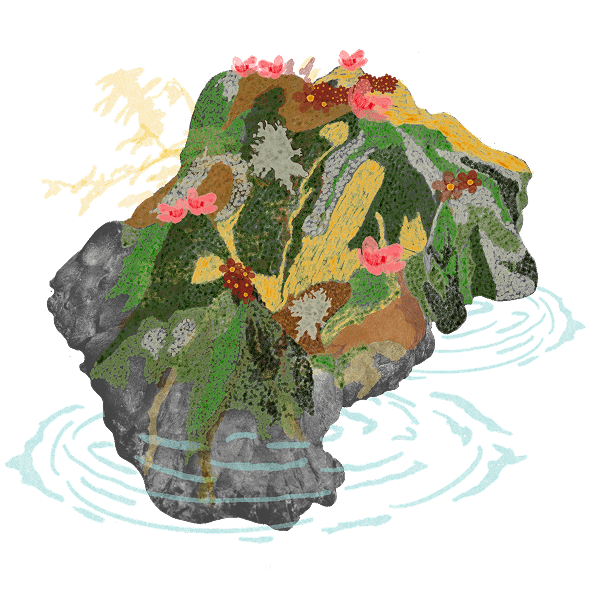
Sound opens the chapter. We arrive with openness.
The noise of elsewhere travels with us, carried from city, journey and memory. Here, it begins to soften. Sound opens the chapter: the call of the ceremonial conch, the breath of the Japanese shō and the voice of the violin gathering us into a shared moment of arrival, intention and ceremony.
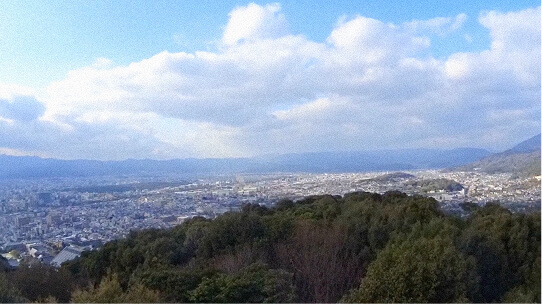
What begins in quiet reflection slowly turns toward celebration, as dusk gives way to a sunset DJ performance and the first movements of the gathering unfold.
From there, the night leads us deeper into Kyoto. Gatherers slip into hidden speakeasies, where jazz moves through bodies and memory, and each drink is composed with the same attention as a ritual object. Built through balance, texture, aroma and restraint, the cocktails become small ceremonies of their own: handcrafted expressions shaped by season, place and the power of detail.
)
)
)
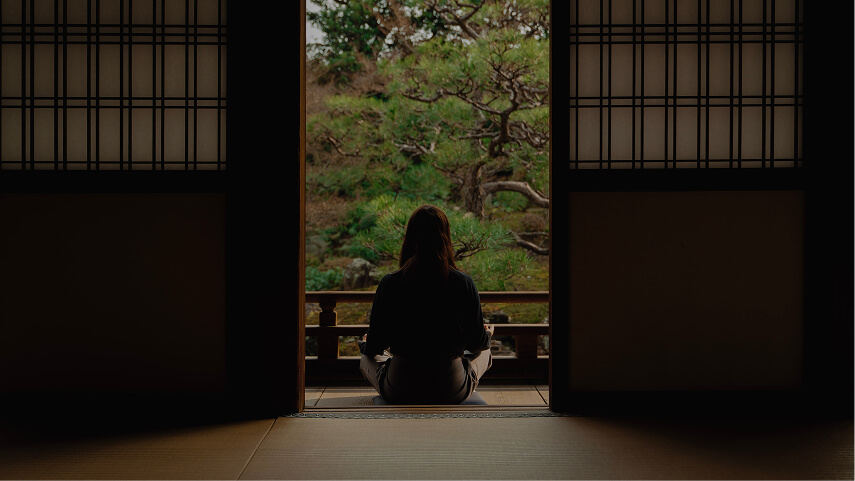
Kenninji Temple Ryosokuin
Attunement through meditation, tea and making
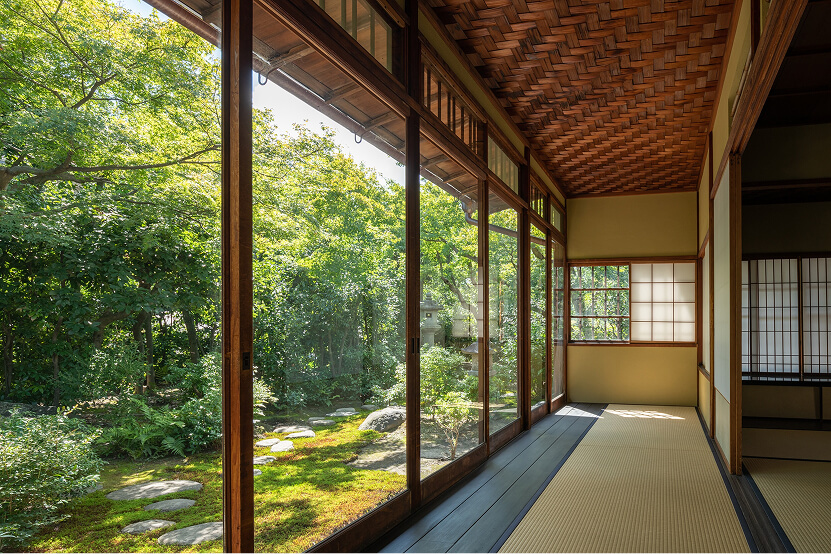
Founded in 1358, Ryosokuin is a sub-temple of Kenninji with deep roots in Zen scholarship, poetry, tea and the arts. Once a cultural salon for artists, writers and craftspeople, it continues to explore Zen through contemporary exhibitions, meditation and tea gatherings. For Chapters guests, Ryosokuin offers a rare encounter with Kyoto’s living traditions, where history, beauty and practice remain alive.
)
)
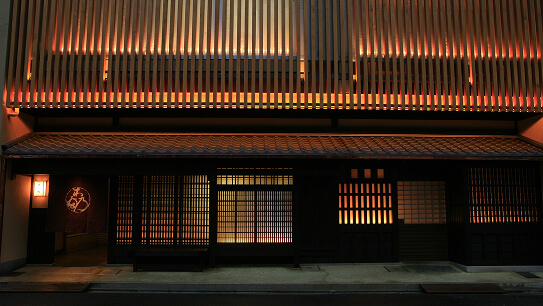
Kinobu
Kaiseki, seasonality and rituals of the senses
At Kinobu, gatherers enter a Kyoto ryotei where cuisine becomes a way of experiencing the world. Guided by third-generation chef Takuji Takahashi, the establishment carries the discipline of traditional kaiseki while opening itself to new expressions of pairing, technique and feeling.
Each course becomes a gesture of attention, moving between heritage and experimentation, the hand of the chef and the life of the land.
North of Kyoto, where the mountains close in and the city falls away, lies Ohara.
This is satoyama, the threshold between the human world and the wild, where the village and the mountain have learned, over centuries, to share. Paddy fields catch the last of the autumn light. Persimmons dry on wooden racks beside farmhouses. The women of the village have carried its harvest to the city for a thousand years.
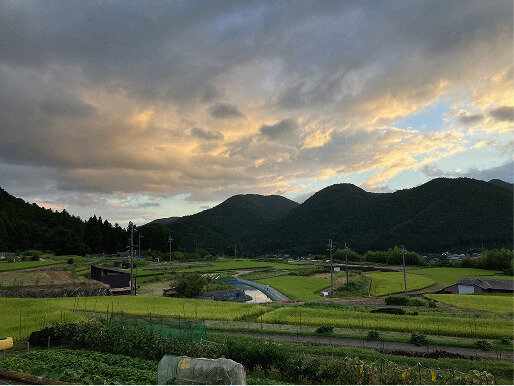
Rice Fields of Ohara Sanso
The gatherers arrive for the final harvest. Here, the day opens wide. Sound moves through the open air, frequencies ebbing through body and mind, and root folk rises from the fields.
)
)
)
)
)
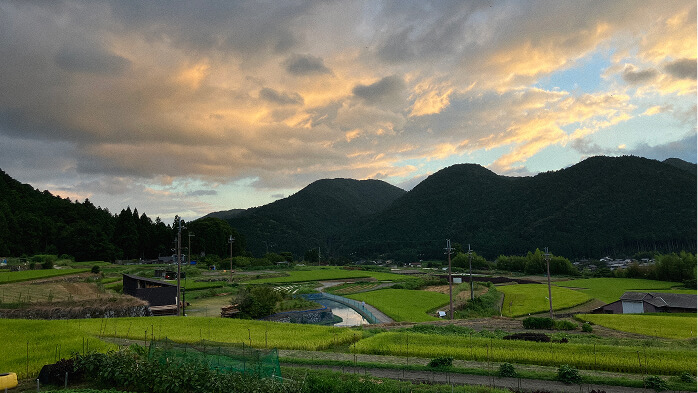
Rice Fields of Ohara Sanso
Being in the village, the gatherers eat. A simple and rare feast, from the knowledge of the land it came from, its craft passed down through elders' hands. The day unfolds, encounter by encounter, under the waxing gibbous moon looming above the mountains. The sōkō, the giving of thanks, belongs to everyone. Villagers and gatherers, together in the last full bloom before the earth rests for winter.


The Garden
A stage nestled within a Japanese Garden
At the edge of the forest, a natural stage emerges between water, stone and green. Surrounded by gardens and shifting light, this open-air space holds a different atmosphere from day into night: quiet and contemplative by daylight, deeper and mystical after dusk.
Here, performances unfold in close conversation with the landscape, where sound, movement and nature meet beneath the trees.
)
)
)
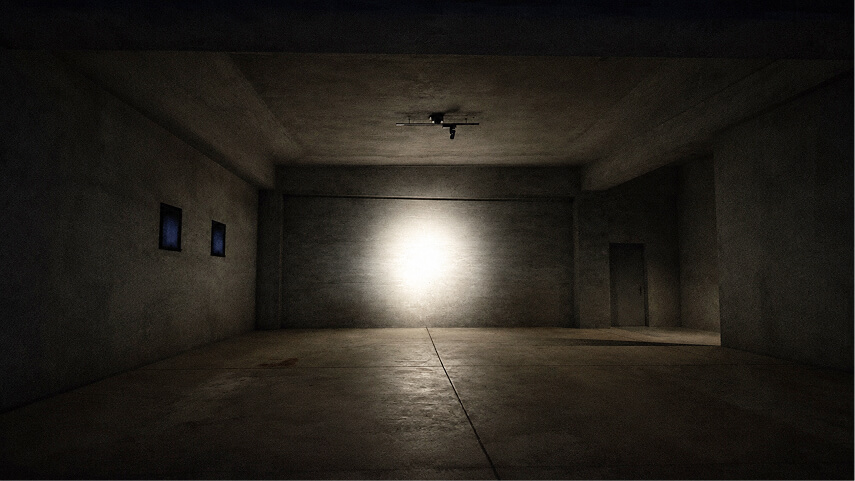
The Garage
The Garage brings experimental spirits to the foreground
In a garage at the edge of the village, technological minds grow natural and virtual worlds. Ancient and future in the same kaleidoscope of visuals and sounds. There are installations to discover, performances that arrive and dissolve.
)
Attunement through the arts
At ACG Villa Kyoto, a residence whose every room was designed to breathe with the garden outside it, the gatherers enter a tea room made entirely of indigo fabric. The colour of deep water.
Translucent walls through which light shifts like weather. To stand inside it is to feel the boundary between self and space dissolve. Nearby, a sculpture that orbited the Earth rests on Tenma silk laid over reclaimed temple wood. The same question, asked from opposite ends of the universe.
)
)
ACG Villa Kyoto
Attunement through the arts
)
A room for tea, stillness and shared presence
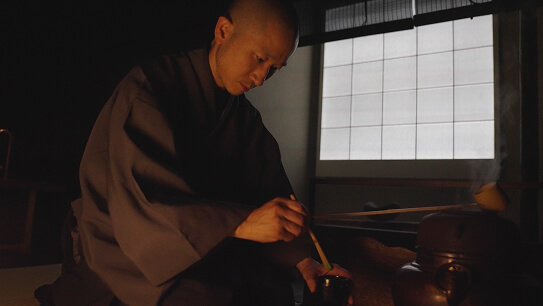
OCHILL TeaRoom opens as a threshold between tea, art and meditation. Rooted in Zen philosophy and Japanese well-being, the space becomes a seasonal tea house, a room for stillness, inquiry and shared presence.
For Chapters Kyoto, OCHILL invites gatherers into the ritual world of tea. Through ceremony, gesture and silence, the experience becomes less about drinking tea than entering a moment fully: the discipline of preparation, the beauty of attention.

The ascent to Mt. Kurama
Mt. Kurama was formed 250 million years ago, when the Philippine Sea Plate moved north and collided with the Eurasian Plate. What did not sink was scraped off and held at the edge, preserved, compressed, charged with time. To understand this mountain, they say, is to understand how the Japanese archipelago itself was formed.
The gatherers rise above the cedar canopy by cable car, into the stillness of the peak. They arrive at the place where Mikao Usui fasted for 21 days beside a sacred tree and received the healing energy of Reiki. Where a monk named Gancho, guided by a white horse in a dream, first felt the mountain's presence and knew it was sacred. Where, for 1,250 years, voices of prayer have risen through the forest and changed the nature of the air.
Year after year, enormous torches move through the darkness of the mountain. Fire purifies the land, preparing the way for the kami to arrive.
At the summit, a closing ceremony. The full moon rises over Kurama, illuminating the cedar forest. The gatherers stand together, facing the city that was dreamed into being on the first day, now far below.
)
)
)
)